How a Leading Pharmaceutical Achieved Real-Time Operational Excellence with FENTA
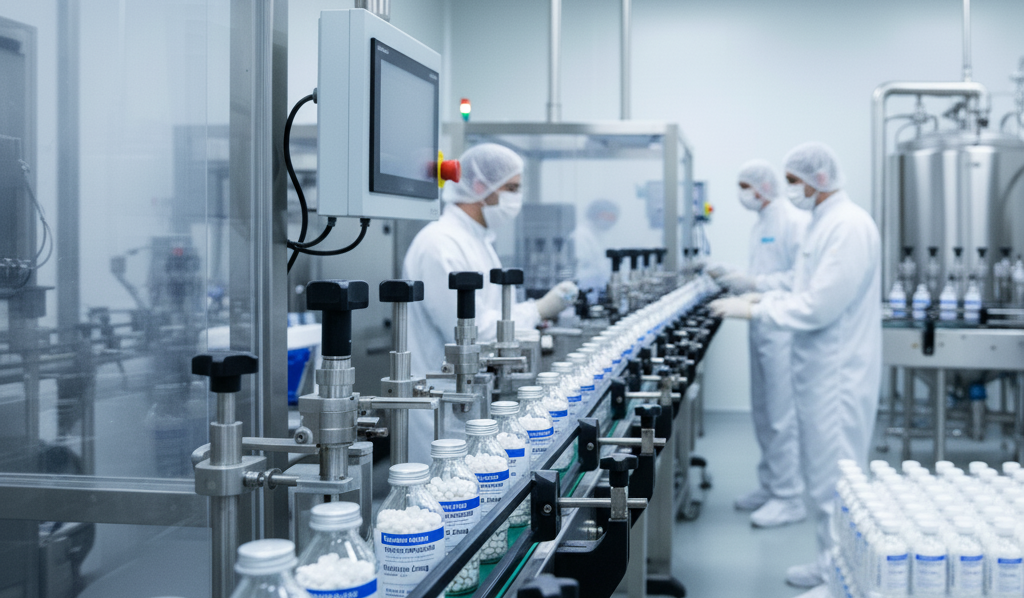
A global healthcare pharmaceutical manufacturer was struggling to keep up with the demands of modern production. Data was trapped in spreadsheets, supervisors lacked real-time visibility, and teams spent more time reconciling reports than improving performance. Inconsistent loss definitions and disconnected systems made decision-making slow and error-prone.
With FENTA, the company transformed its operations into a real-time, data-driven, and proactive manufacturing ecosystem. By integrating machines, digitizing operations, and standardizing analytics, they unlocked transparency, boosted productivity, and built a scalable foundation for continuous improvement.
Business Challenge
-
Fragmented data & manual logs: Performance and downtime were recorded on spreadsheets and paper, delaying accurate OEE (Overall Equipment Effectiveness) calculations and hiding chronic losses.
-
Limited line-of-sight: Supervisors lacked real-time visibility into availability, performance, and quality—making review meetings reactive instead of preventive.
-
Inconsistent loss categorization: Different teams used varied codes and definitions, preventing like-for-like comparisons across lines and shifts.
-
Disconnected systems: Production orders originated in ERP, but confirmations, exceptions, and actuals were tracked separately—causing reconciliation delays and increasing error risk.
-
Scalability concerns: Any solution needed to be resilient, secure, and capable of scaling across multiple plants and production lines.
Solution
1. Machine Integration
- Non-intrusive connectors to PLCs/IoT gateways for capturing run/idle/stop states, counts, and key process signals automatically.
2. OEE Analytics
- Standardized OEE model (Availability, Performance, Quality) with a common taxonomy for downtime and speed losses.
- Role-based dashboards: real-time line status, shift OEE, Six Big Losses Pareto, MTBF/MTTR, and first-time-right.
- Root-cause acceleration: drilldowns by line, shift, SKU, or operator with trend views to separate chronic vs. sporadic losses.
3. Production Operations Digitization
- ERP-integrated order dispatch & execution: operators receive digital work orders, start/stop, changeover, and confirmations logged automatically.
- Traceable counts & scrap: automated good/reject counts with reason codes, with exceptions captured at source.
4. ERP Integration
- Bi-directional sync for materials, routings, and production orders ensures data consistency and seamless operations.
Benefit
-
Real-time transparency: A single source of truth for OEE and losses—eliminating the need for end-of-shift spreadsheet updates.
-
Faster decisions, fewer surprises: Shift leads and maintenance teams act on live alerts, enabling proactive interventions.
-
Higher productive time: Automated capture and guided operations reduced unplanned downtime and micro-stoppages.
-
Quality at the source: First-time-right improved through early warnings and digital checks.
-
Scalable foundation: Modular architecture ready for additional lines, plants, advanced analytics, and continuous-improvement programs.